Bertillon Sold It as Science.
Meta Is Selling It as Convenience.
Alphonse Bertillon built the first modern surveillance system in the 1880s and called it scientific progress. The tools have changed. The pitch hasn't.
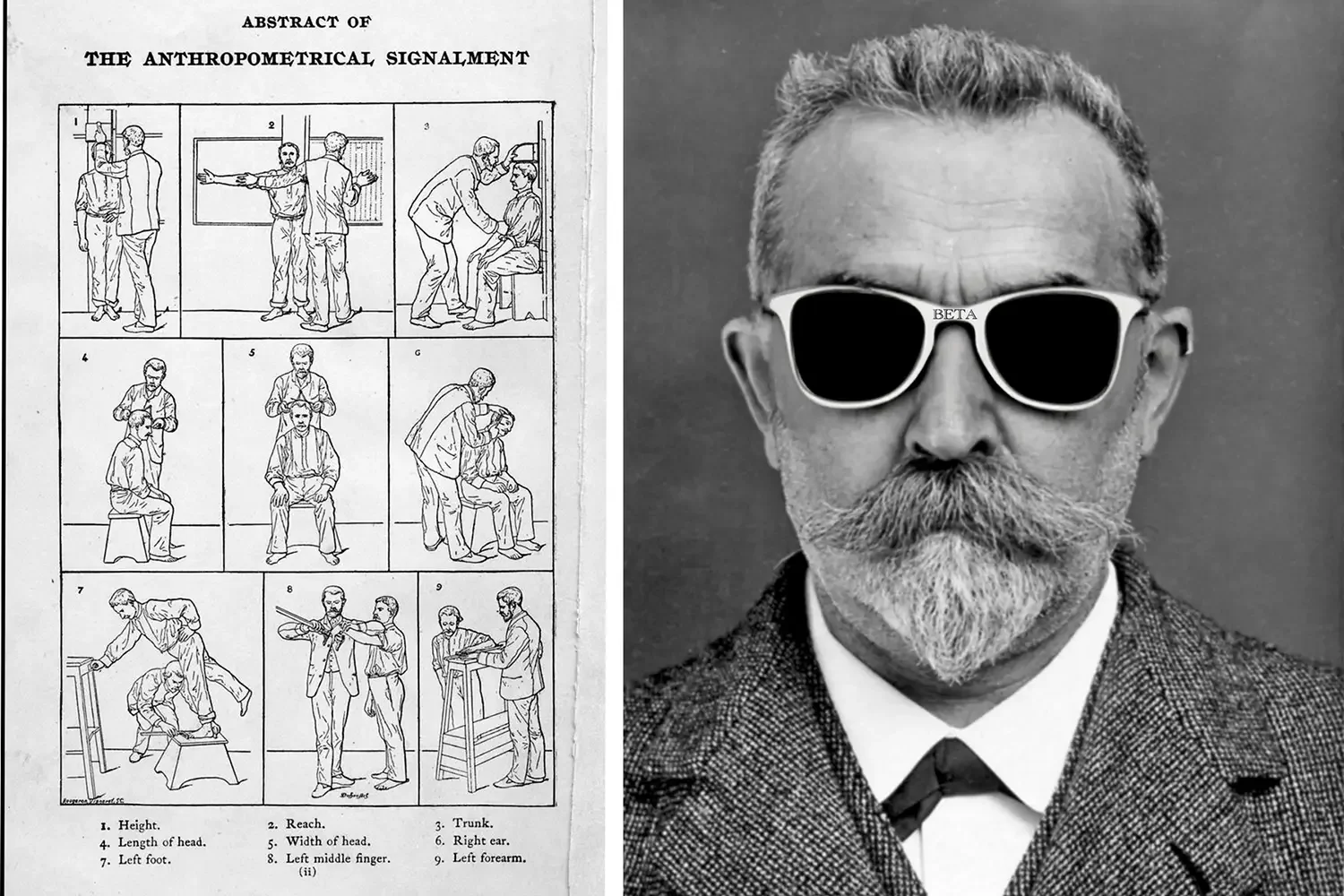
Alphonse Bertillon didn't pitch his system as surveillance. He pitched it as science. The Paris Prefecture of Police in the 1870s was identifying repeat offenders by memory, by informant, and by the testimony of officers who recognized a face from a previous arrest. It was unreliable, inconsistent, and occasionally brutal. Bertillon offered something better: a rational, reproducible system of eleven precise body measurements combined with standardized photographs, front and profile. He called it anthropometry. The institutions that adopted it weren't wrong to want something better. They were wrong to assume that a more sophisticated tool was a more accurate one, and wrong to assume that accuracy was the only thing that mattered.
How the System Gets Built
Bertillonage spread through European and American law enforcement in the 1880s and 1890s because it was modern, systematic, and appeared to work. Courts accepted it. Police departments invested in it. The Paris Prefecture trained operators and built filing systems around it. By the time the system's limits became visible, it had become infrastructure, and infrastructure is not evaluated the same way a tool is evaluated before adoption. Once something is embedded in enough institutions, the argument shifts from whether it should exist to whether anyone can afford to remove it.
That institutional logic is the mechanism this piece is about. Bertillon's system is one instance of it. It is not the last.
The Will West Problem
In 1903 at Leavenworth Penitentiary, two unrelated men named Will West and William West arrived at the same federal prison. Will West's Bertillon measurements matched William West's existing file so closely that the records clerk initially concluded they were the same person. Their fingerprints did not match at all. The warden declared it the death of Bertillonage and replaced the system the following day.
The popular version of the story casts the West case as the single event that broke the system. The more accurate version is less dramatic and more useful: the case wasn't published anywhere until 1918, fifteen years after it happened, by which point fingerprinting was already replacing Bertillon's system for reasons that had been accumulating for years. The West case became the story that explained a transition already underway. The system didn't collapse because of one case. It collapsed because the case gave institutions permission to do what the evidence had been suggesting for some time.
The Intellectual Climate It Came From
Bertillonage did not emerge from a vacuum. The 1880s were full of scientists, photographers, and institutions convinced that the body was a legible document, that character, heredity, and identity could be read from physical measurement. Francis Galton, whose composite photography overlaid dozens of individual portraits to extract the face of a supposed type, was operating from the same premise as Bertillon: that a face contains reliable, fixed, readable data about the person behind it. Galton's project became the foundation of the eugenics movement. Bertillon's project became the foundation of modern criminal identification. Both were eventually discredited in ways that are now part of the historical record. The premise moved forward anyway.
The people who pointed this out at the time were not treated as serious critics. They were treated as obstacles to progress.
What Gets Called Convenience Now
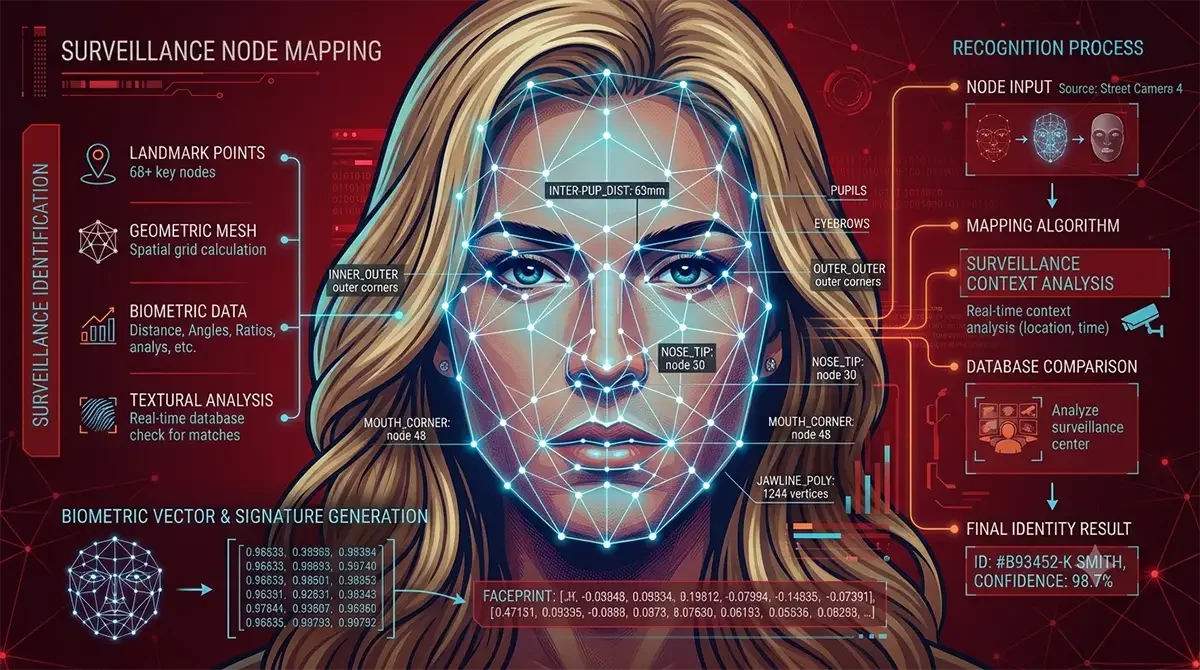
In October 2024, two Harvard students demonstrated a system called I-XRAY. Using Meta Ray-Ban smart glasses with cameras embedded in the frame, they built software that livestreamed video to Instagram, monitored the stream for faces, ran those faces through a facial recognition engine, and returned names, home addresses, phone numbers, and relatives' names for strangers on the Harvard campus and in the Cambridge subway system. The glasses looked like glasses. The people being identified had no idea it was happening. Meta responded to the demonstration by directing users to comply with applicable privacy laws. That is the full extent of the friction.
Meta did not build I-XRAY. The students built it from components that were commercially available, legally accessible, and trivially combinable. The glasses were sold as a lifestyle product. The infrastructure required to turn them into a real-time identification system was already in place, assembled from facial recognition databases, people-search engines, and large language models that anyone can access.
There is a second problem underneath the first one. Even organizations with genuine intentions about data security operate on systems that are not perfectly protected. Bertillon's filing cards required a bad actor to be physically present in the same building. A database requires only a connection and time. The perimeter of that risk is now global and permanently open, and it belongs to every organization that holds facial data, regardless of how carefully they intend to use it.
The Pitch Hasn't Changed
Workplace biometric systems are sold as security. Facial recognition at airport gates is sold as efficiency: the TSA is expanding its Touchless ID program to 65 airports by spring 2026, and the CBP began requiring facial biometrics from non-citizens at airports as of December 2025. Photo delivery services like Spot My Photos and Waldo are sold as a way to find yourself in the crowd at a race or a school event. Each pitch leads with a genuine benefit. Each one asks you to hand your face to a system as the price of that benefit. None of them lead with what happens to that data after the transaction is complete, who can access it, how long it is retained, under what circumstances it can be shared, or what recourse you have when it is used in a way you didn't anticipate.
Bertillon's system asked the same thing. The people it was applied to didn't negotiate the terms either. The difference is that Bertillon's subjects were in state custody. Yours is a voluntary transaction, and the camera is in the glasses of a stranger at a coffee shop.
What Objection Costs
The normalization mechanism has a social component worth naming. People who raise concerns about surveillance tools are not typically engaged as serious critics. They are positioned as resistant to progress, indifferent to safety, or naive about how the technology actually works. The message, usually implicit, is that objection is a position for people who don't understand the situation. This is not an accident. It is the same social pressure that kept Bertillonage in place for years after its limits were well-known. The institutions using it had too much invested to hear the criticism clearly, and the critics were easier to dismiss than the system was to dismantle.
The technology changes. The social logic of its adoption does not.
What You're Actually Looking At
The question is not whether these tools offer a genuine benefit. Most of them do, in the same way Bertillonage offered a genuine improvement over what preceded it. The question is what you're agreeing to when you accept the benefit, and whether the terms of that agreement were ever actually explained to you.
They weren't explained to Will West either, but he didn't have a choice about participating. You still do, for now, and the window in which that remains true is not staying open indefinitely. Infrastructure has a way of making itself permanent before the people inside it have decided whether they wanted it.
Where This Comes From
History of Photography, Module 05: Photography, Science, and the Myth of Objectivity — scottparkerphoto.com/history-of-photography/course-outline
Further Reading
Rare Historical Photos, "The Will and William West Case: The Identical Inmates that Showed the Need for Fingerprinting, 1903" — documented account of the Leavenworth case. rarehistoricalphotos.com
Forbes, "Meta's Ray-Ban Smart Glasses Used To Instantly Dox Strangers In Public" (October 2024) — reporting on the I-XRAY demonstration by Harvard students AnhPhu Nguyen and Caine Ardayfio. forbes.com
Boston Globe, "AI and Meta smart glasses can turn a person's photo into personal info, Harvard students find" (October 2024) — independent account of the I-XRAY demonstration. bostonglobe.com
VisaVerge, "2026 Guide: Airport Facial Recognition & Opt-Out Rules" — current TSA and CBP facial recognition expansion and traveler opt-out rights. visaverge.com
Note: Sources located by AI research. Readers should verify independently before relying on them.