Making Photogravures with Polymer Plates
A modern twist on historical photo-mechanical printing using steel-backed polymer plates, etched with water, and printed by hand with traditional intaglio processes.
Notes: This book was originally published 2013. It was born from an expanded PDF that was initially written as an internal document to share with research colleagues as wall as students on campus for a module in printmaing and photography classes.
Since it is currently out of print, it will be shared here. Much of the satelite technology has evolved. Photoshop has grown a lot. It’s been discovered that enough information exists with 8-bit sRBG color space to make all necessary adjustments (no need for larger color spaces). Exposure units now use LED bulbs. The underlying processes within the book are the same. The manual printing techniques used have been nearly the same for half a millenium! Some people are still making photogravures with many of the same methods championed by Alfred Stieglitz. The book content is reproduced, as it was originally written in 2013.
Introduction
After graduate school, I bought some of Dan Welden’s Solarplates because I was excited to make intaglio prints. I did not have the facilities of a proper print shop, and though that the Solarplates would make a good surface for both intglio and relief. They do, but I could not figure it out quickly, so impatiently moved on to other printmaking techniques. Knowledge on the internet was scattered and sometimes inaccurate, so I did not revisit the challenge for a few years. Eventually, I was asked by the chair of the Art Department, of the university where I teach, if I wanted to help figure out how to use polymer plates to make photogravures. He and his photographer friend were looking for some printmaking input.
I was excited to have other people helping me sort through all of the good and bad information that exists on the world wide web about this process. We recognized that the process would be full of trial and error, but some eaerly days felt like they had more error than normal. After eliminating some misleading internet instructions, we began to see some acceptable results. The ball was rolling for me as I did more and more research on my own (making many mistake along the way). I grew excited to report what I had found, and compare notes with the others. David Hanson and Lyle Allan have been a big help starting the research that has turned into a large body of photogravure work for me, and the eventual first draft of this book.
Learning this with other encouraging people makes it much easier. The photogravure process brings together some skill set that are not commonly corssed. It requires skill in intaglio printmaking, traditional photography, with good understanding of digital image editing and output. Having a group of people to share idea is important.
The intent of this book is to share the work flow that I have developed over the past three years. The methods shown are born of constant experimenting to find a balance between two things: first, finding the least expensive tools available and second, having resources that are of high enough quality to print good photographic images. Many methods, other than my own, create equally good images. I am simply sharing my workshop secrets, with the hope that more poeple will be encouraged to experiment with this unique and versatile method of intaglio printmaking.
The polymer plates used in this book are Printight KM73 by Toyobo. I get them from boxcarpress.com. They hold fine dot patterns that will allow for good resolution of the final print. All of the methods in this book will also work with Dan Welden’s Solarplates. I have seen exceptional images made from both brands of polymer plates.
Safety
Very Basic Safety Equipment:
gloves (latex, nitrile, or vinyl)
UV filtering eye glasses (get from lab supply company, not just sunglasses)
clean water supply
basic first aid kit
willingness to accept responsibility for your own safety.
Disclaimer:
I am not a medical professional, and cannot offer advice on any individual’s health or safety. The well-being of each person is completely up to each individual, and each person’s decision whether or not to attempt any of the techniques found here is completely up to that individual. This book reveals a workflow that has developed from much trial and error. I have read the manufacturers’ material safety data sheets fro each product that I have used ,and consulted personal physicians. I strongly suggest that you do the same. Your health is your responsibility, not mine.
A Few Basic Safety Concerns:
UV light is harmful to both skin and eyes. Minimize your exposure by making sure the UV exposure system does not have any light leaks, and leave the room while the UV exposure system is running. The UV light required for curing photopolymers used in KM73 plates (and most photographic contact printing) is unfiltered. The exposure units emit unfiltered UV light that are much stronger than simple “blacklights” or tanning lights. The damage to eyes and skin can be significant. Long sleeve clothing and UV filtering eye glasses can minimize exposure, but will not block it completely. Do not rely on clothing or glasses as the only means of protection from ultraviolet light.
The KM73 photopolymer plates made by Toyobo are designed for the commercial printing industry. They are normally exposed and developed in expensive all-in-one units that automate the process and remove most human involvement. The manual processing shown in this book is essentially a hack of commercial supplies. It is only safer (perhaps) than acid etching on metal because the hazards are easier to manage. The process still involves some risks.
I have yet to read a book or set of online instructions that calls for active ventilation while processing the KM73 plates. They emit a slightly sweet odor while being washed out in water. I treat the chemistry of this particular process with the same caution and respect that I have for all photographic processes and believe that active ventilation is needed.
Wear gloves while processing uncured plates, particularly during the water bath washout phase. Many people do not have a reaction to the polymers in these plates, but long-term effects are not well documented. Anecdotal evidence suggests that anything is possibel: immediate reaction the first time yo uuse the plates, delayed reaction after years of using the plates, or no reaction at all. I am in the habit of wearing gloves while handling lates: unexposed plates, during washout, while drying, through the last step of sanding the edges of an exposed and cured plate. I do not touch the plate with bare hands until I am placing it on the table to receive the first coat of printing ink.
The plate oil found in most intaglio printmaking inks does not irritate most people’s skin. Typically, the pigments and modifiers are the cause of irritation and more serious threats to one’s health. There are rare cases, however, where even the oil has caused problems, so you may not want to take the risk of handling any oil or ink with bare hands. Choose ink from manufacturers who list ALL of the pigment, vehicles, and modifiers on the label of each color of ink. Buy an artist’s safety book and read about hazards of various pigments. Cadmium and lead should be avoided. Educate yourself and make your own decisions.
Be careful with solvents (paint thinners, degreasers, cleaning products). Harmful effects can range from mild skin irritation to serious medical conditions. Read the label. Wear gloves. Use adequate ventilation.
Equipment
for IMAGE CAPTURE:
-Camera
-Flatbed scanner
for IMAGE EDITING:
-Adobe Photoshop image editing software
-Epson Stylus Proj 3800 inket printer
-Fixxons Waterproof Silk Screen Positive Film
-Print Dryer
for TRANSPARENCY PREPARATION:
-straight edge and razor blade (can use scissors or other cutting tool)
-baby powder (talc)
-3” hake brush
for PLATE MAKING:
-KM73 photopolymer plates from Toyobo. (purchased from Boxcar Press)
-Stochastic pattern screen (a.k.a. “Aquatint” screen) from Takach Press
-Ryonet RXP16×20 UV exposure unit
-Aristo Platinum Printer (discontinued UV exposure unit)
-Gralab 500 darkroom timer
-darkroom “safe light” (this process is not as sensitive as some, so any safelight will work)
-soft washout brush
-developing tray (can use a cheap plastic tote as an alternative
-latex gloves (can be nitrile or vinyl)
-UV glasses (that block at least 300 - 400 nm of light, check wavelength of your exposure unit to make sure you have adequate protection).
-paper towels
-hair dryer
for PREPARING PLATE FOR PRINTING:
-”guillotine” paper cutter (strong enough to cut thin steel back of KM73 plate, tin snips can be used too)
-fine bastard cut file
-sand paper (400, 800, 1200 grit)
-block of wood (to hold sand paper)
for INKING AND WIPING THE PLATE:
-tempered glass palette (to mix ink, any hard and smooth surface will work)
-putty knife (or scaper) from hardware store
-Gamblin Burnt Plate Oil #000
-Gamblin Burnt Plate Oil #2
-Graphic Chemical Easy Wipe
-Graphic Chemical Etching Ink (various colors, mostly different shades of black)
-magnet sheet (glued to table, which will hold the KM73 plate while inking)
-newsprint sheets
-soft plastic scraper/squeegee (from Takach Press, can also use Bondo brand squeegee found in auto body repair kits)
-tarlatan
-phone book pages
for PRINTING THE PLATE:
-large plastic tub for soaking paper
-blotter paper (100% cotton is best, but this book shows newsprint being used)
-Rives BFK printmaking paper (100% cotton/rag, 280 gsm)
-wire drying rack
This list only includes websites for difficult-to-find items. For everything else, I suggest that you use the internet to shop for the best price you can find.
Frequently Asked Questions
What is a photogravure?
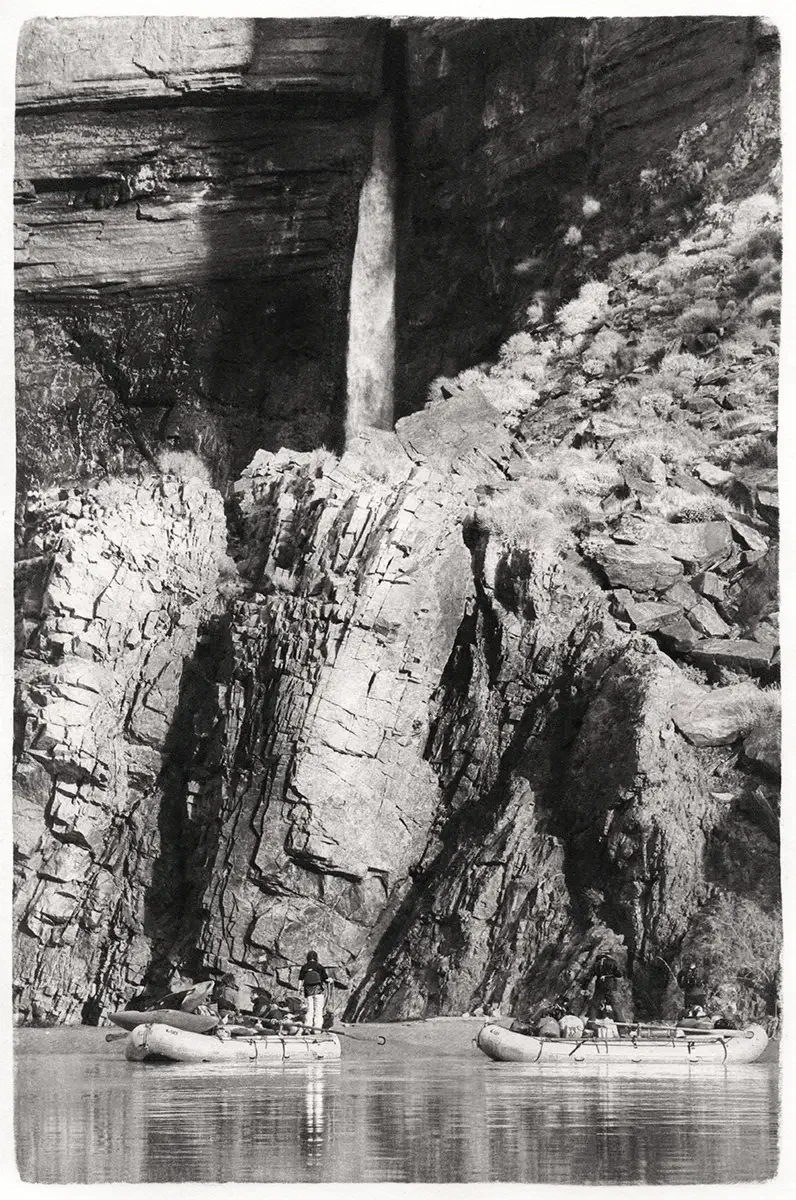
A photogravure is an intaglio print made from a photographic image. Ink is held in the recessed areas of a plate, transferred to dampened paper under the pressure of an etching press. The result is a print with continuous tonal gradations and a physical presence that no inkjet or digital output can replicate.
What is the difference between traditional photogravure and polymer plate photogravure?
Traditional photogravure uses a copper plate coated with a light-sensitive gelatin tissue, etched with acid. The polymer plate method replaces the copper and acid with a steel-backed photopolymer plate etched with water. The results are comparable in tonal quality. The polymer process is significantly less hazardous, less expensive, and more accessible to artists working outside a professional print shop.
What are KM73 polymer plates?
KM73 is a steel-backed photopolymer plate made by Toyobo, originally designed for the commercial printing industry. For photogravure, the polymer surface is exposed to UV light through a stochastic screen and an image transparency, then washed out in water to create a fine intaglio relief that holds ink for printing.
What skills do I need before attempting this process?
The process requires competence in three areas: digital image editing and output, basic darkroom or alternative photography technique, and intaglio printmaking. Most people arriving at this process are strong in one or two of these areas. The learning curve is steepest for whichever area is least familiar. Time spent in the print shop learning to ink and wipe a plate is as important as time spent calibrating exposure.
What equipment is required to get started?
At minimum: a computer with Photoshop, an inkjet printer capable of printing on transparency film, a UV exposure unit, a contact printing frame, KM73 polymer plates, a washout tray, etching ink and modifiers, tarlatan, an etching press, and 100% cotton printmaking paper. A full equipment list with sourcing notes is on this page.
Is this process safe to do at home?
It depends. The primary hazards are UV light exposure during plate exposure, polymer chemistry during washout, and solvents during cleanup. UV filtering safety glasses, gloves, and active ventilation can mitigate the main risks. The polymer plate process uses water instead of acid. Long-term exposure to polymers is unknown to me. People with concerns should consult the manufacturer, their personal physican, and read the material safety data sheets for every product used.
How long does it take to make a photogravure print?
The full workflow from digital file to finished print spans multiple sessions. Printing a transparency, exposing and processing a plate, and running a print through the press can each be done in a single session of a few hours. Calibration work — finding base exposure time, image exposure time, and building adjustment curves — requires additional sessions and multiple test plates before consistent results are achievable.